
Dawn's Notes
Lovespoons - February 2023
by Dawn Phelps, RN/LMSW
Imagine a young man sitting beside a fireplace in Wales many years ago. It is winter, and the sun has already gone down. A fire is flickering in the fireplace, yielding only a dim light. It is raining outside, and there is a chill in the air. The young man pulls his chair a bit closer to the fire to get more warmth from the flames and to examine the beginnings of his wooden spoon in the firelight. As he carefully smooths out the tiny ridges of the wood, he thinks about a young lady who has caught his eye. He is carving a spoon for her for Valentine’s Day, January 25 in Wales, and he wants it to be perfect. The young man’s hand trembles as he carves on the thin handle of the spoon. He hopes she will see the spoon as a message that he would like to spend some time with her. He carves carefully, knowing that if the wood would split or his hand would slip, his lovespoon, as they are called in Wales, would be ruined. He decided on a spoon with two hearts, hoping the special lady would show interest in him too. Maybe someday the spoon would hang on the wall in a house they would share.
In years gone by, like the young man in Wales, other men in Europe carved spoons during the wintertime. The custom of spooning may have begun in Germany, but by the 1800s the custom had spread to Wales. According to history, some of the peasants that lived in Europe many years before did not have enough money for metal spoons. So out of necessity, the men carved wooden spoons for cooking as well as for eating. As young men’s hearts turned to thoughts of love and romance, their carvings became more than a pastime during the long dark winter nights. Their spoons became more intricate, ways to express their feelings of caring or love.
Lovespoons were also about hope. Hope to make something good come from the long, cold, dark winter nights. Hope that a special lady would someday care about him. Hope for sunlight, warmer days, and a future. Lovespoons, carved from various woods, are a way to say “I love you or I care.” And with practice, the young Welsh men’s skills became more refined, and themes for the spoons expanded. Lovespoons are now carved for various occasions—weddings, anniversaries, births, good luck, or friendship. Men are no longer the only ones to give lovespoons in Wales—they are given by men and women.
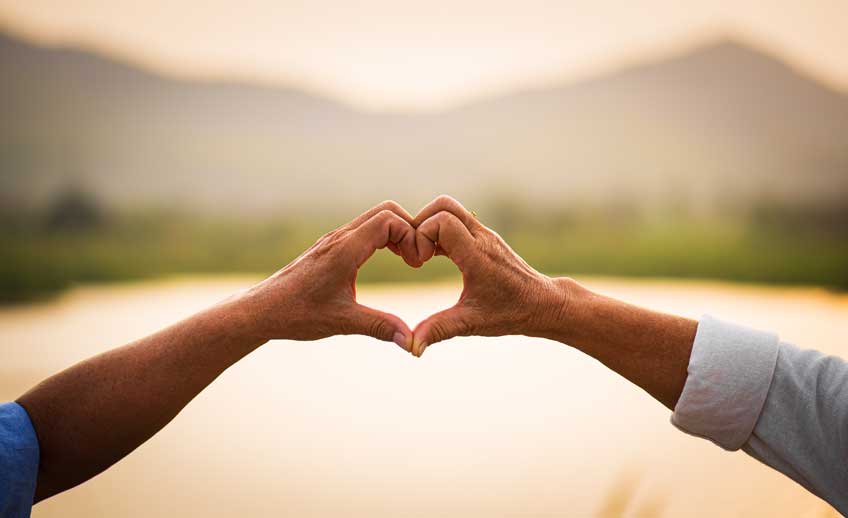
In February as we celebrate Valentine’s Day here in the U.S., it is a time to give valentines and other treats to those we love. But as we grow older or after the loss of someone dear to us, Valentine’s Day can become a time of sadness that reminds us that the one we love is no longer with us. But love is eternal—it will never end! Even though we can no longer celebrate Thanksgiving with the one who has gone on, we can make memories with those who are around us. And we can find small ways to express kindness and send the message that says, “I care about you, and you matter to me.”
Most likely, you will not have lovespoons to give, but you can be creative in how you send your messages of love. One lady I know gives out candy “hugs” and “kisses” to anyone she meets around the holidays. She’ll ask, “Do you want a hug or a kiss?” and hardly anyone refuses her offer. Her sweet chocolate gestures brings smiles for many! Research shows that giving to someone else can be helpful to the giver as well as the receiver. So this Valentine season consider giving to someone else and be kind to yourself as well. Remember that a little chocolate never hurts anyone!
“The best and most beautiful things in the world cannot be seen
or even touched—they must be felt with the heart.”
Helen Keller
Call about the next "Living Life after Loss" Group at:
Meadowlark Hospice
709 Liberty, Clay Center, Kansas
(785) 632-2225
Dawn Phelps, RN/LMSW, Group Facilitator